
Feeling overwhelmed, disconnected, or not like yourself after childbirth?
If you are experiencing a medical emergency or emotional crisis, dial 911 and/or call or text the Suicide & Crisis Lifeline at 988.
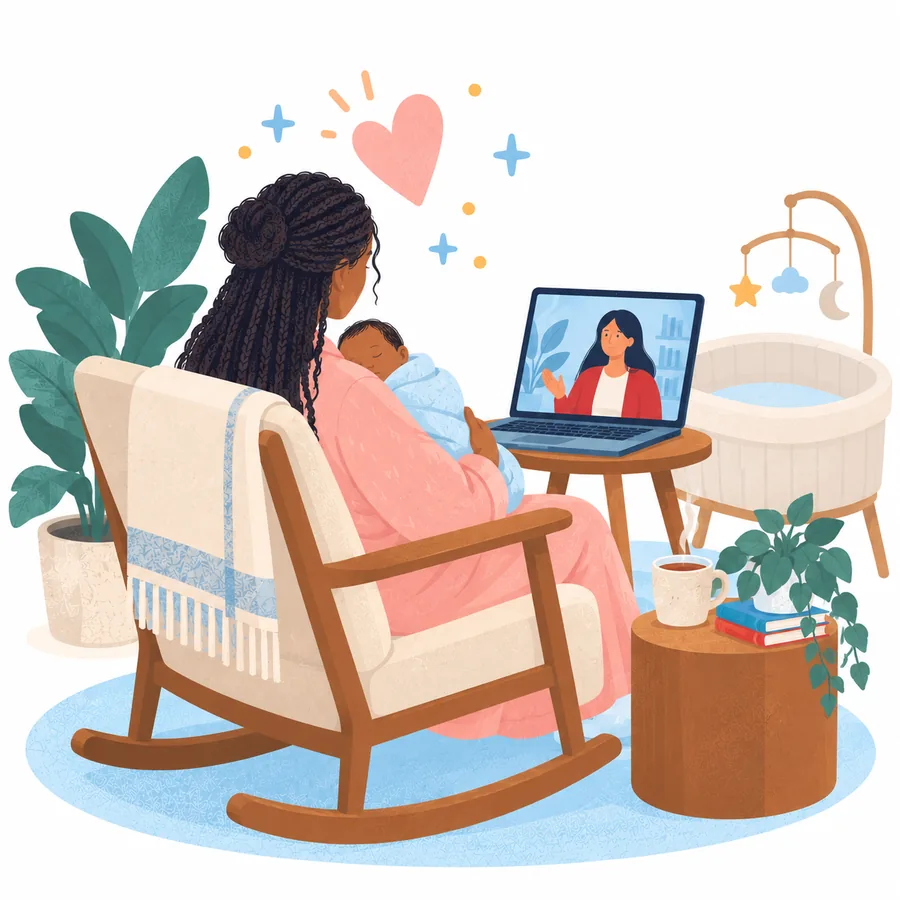
The “baby blues” — tearfulness, mood swings, feeling overwhelmed in the first couple of weeks after birth — are common and may pass on their own. Postpartum depression and anxiety are different: more intense, longer-lasting, and not something you can just push through.
It can affect any parent, not only birthing parents, and it can start during pregnancy as well as after delivery. None of it reflects how much you love your baby or how capable a parent you are — it’s a medical condition, and a very treatable one.
Everyone experiences postpartum depression and anxiety differently. You may benefit from talking to a provider if you have any, or a combination of, the symptoms below.
You don’t have to figure it out alone. Our licensed providers are available to help you understand what’s going on and build a plan from here.
Depression that develops soon after delivery or within the first year after birth.
Persistent, hard-to-control worry centered on your baby’s health and safety, or your ability to parent.
Intrusive, unwanted thoughts about your baby’s safety, paired with checking or avoidance behaviors.
Support for the broader emotional weight of a major life transition, even without a formal diagnosis.
Postpartum mood symptoms come from a mix of biology, history, and circumstance.
Many patients do well with a combination of psychiatric medication management (when medically appropriate) and talk therapy, tailored to their symptoms and goals.
Many antidepressants are considered generally safe with breastfeeding — your provider will talk through the risks and benefits with you.

Meet with a licensed provider from your phone, tablet, or computer, wherever you feel most comfortable.
Booking takes just a few minutes. We’ll connect you with a licensed provider who treats postpartum conditions and get you on the calendar.
Get Started
Start by completing our online appointment request. Share a few details so we can match you with the right care. Get started today
One of our team members will contact you to schedule your appointment, review insurance and self-pay options, and answer any questions.
Before your appointment, you’ll receive simple instructions to help you check in and get ready.

On the day of your visit, check in as directed to let us know you’re ready. Our team is here to support you every step of the way.
Fast Pace accepts most major insurance plans, including Medicaid and Medicare, plus a simple self-pay option for uninsured patients.
Question about whether we accept your health insurance? Call our team at (855) 560-4999.
Call the number on the back of your card to confirm coverage for your visits with our providers.
Don’t worry — our team can also help verify your coverage at the time of your visit.
Yes. Depression isn’t limited to birthing parents — partners and adoptive parents can experience it as well, driven by the same mix of sleep loss, stress, and life change.
Postpartum psychosis is rare and much more severe, involving symptoms like confusion, hallucinations, or delusions, usually within the first days or weeks after birth — it’s a medical emergency. Postpartum depression and anxiety are far more common and don’t involve a break from reality.
We accept most health insurance and managed care plans for virtual behavioral health visits, including Medicaid, Medicare, and most commercial insurance. Coverage continues to evolve, so if you plan to use insurance benefits you’ll be responsible for any co-pay, deductible, coinsurance, or non-covered services as determined by your plan.
Yes, we accept most Medicaid plans for virtual behavioral health visits. Schedule your visit and our team can help verify your specific coverage and availability before you’re seen.
Yes, we accept Medicare and most managed Medicare plans for virtual behavioral health visits. As with any insurance, our team can help verify your specific coverage.
We offer a simple self-pay option for virtual visits. No insurance, no problem — you can be seen and pay a flat self-pay rate at the time of service.
Yes. Appointments are held through a secure telehealth platform, and you can join from home or a private room at a Fast Pace Health clinic for added confidentiality.
This service is not for emergencies or crises. If you are experiencing a medical emergency or emotional crisis, dial 911 and/or call or text the Suicide & Crisis Lifeline at 988.
Book a virtual visit to meet with a licensed provider who is available to help with your postpartum depression & anxiety.
Get Started