
Depression is more than just feeling sad.
If you are experiencing a medical emergency or emotional crisis, dial 911 and/or call or text the Suicide & Crisis Lifeline at 988.
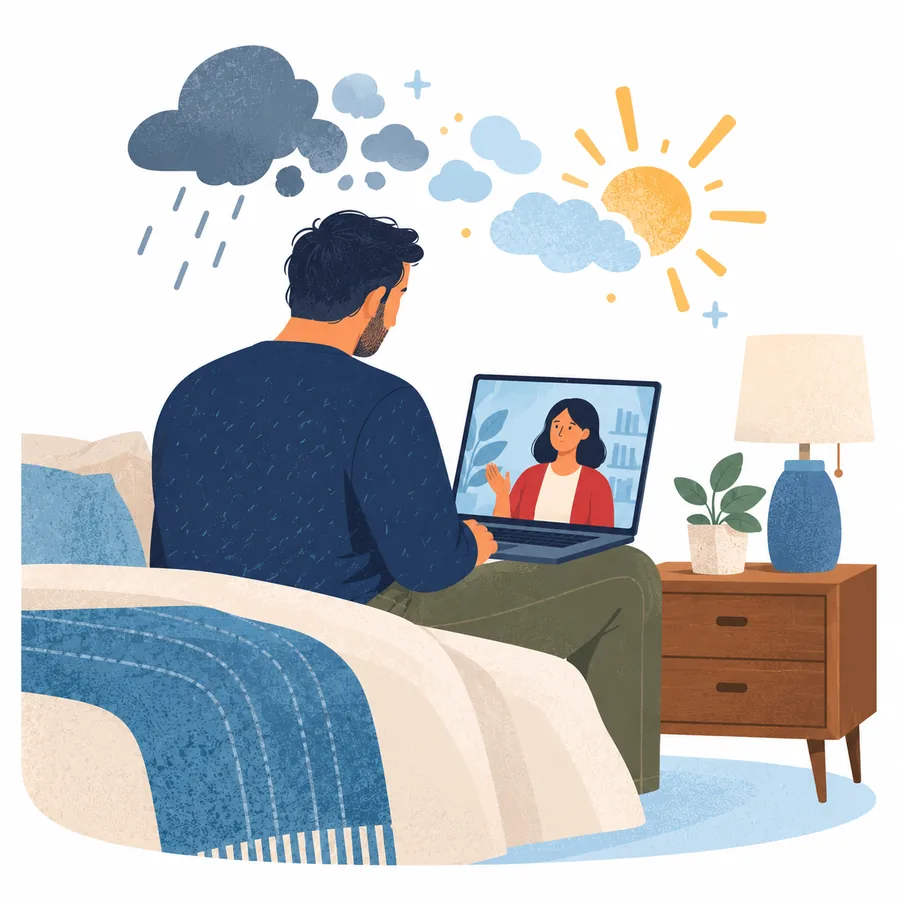
Depression is more than a bad week. It’s a persistent heaviness — low mood, low energy, and a fading interest in things that used to matter to you — that doesn’t lift on its own.
It shows up differently from person to person, ranging from a dull, manageable weight to something that makes getting out of bed feel impossible. Left untreated it tends to linger; treated, many people start feeling noticeably better within a matter of weeks.
Everyone experiences depression differently. You may benefit from talking to a provider if you have any, or a combination of, the symptoms below.
You don’t have to figure it out alone. Our licensed providers are available to help you understand what’s going on and build a plan from here.
Persistent low mood and loss of interest that lasts most of the day, most days, for two weeks or longer.
Depression that develops during pregnancy or in the year after childbirth, beyond typical new-parent exhaustion.
Mood changes that follow the calendar, typically worsening in the darker fall and winter months.
The depressive phase in certain types of bipolar disorder, common depression symptoms alongside patterns of mood elevation.
Depression that developed after, or was intensified by, a difficult or traumatic experience.
Depression rarely has a single cause — it’s usually a mix of biology and circumstance.
Most patients do best with a combination of psychiatric medication management and talk therapy, tailored to their symptoms and goals.
When medically appropriate, medication may help take the edge off enough for therapy and daily life to both get easier. Antidepressants are generally intended to work by helping balance and regulate brain chemistry over time — most people notice a difference within a few weeks.

Meet with a licensed provider from your phone, tablet, or computer, wherever you feel most comfortable.
Booking takes just a few minutes. Click below to get started scheduling your appointment with a licensed provider who treats depression.
Get Started
Start by completing our online appointment request. Share a few details so we can match you with the right care. Get started today
One of our team members will contact you to schedule your appointment, review insurance and self-pay options, and answer any questions.
Before your appointment, you’ll receive simple instructions to help you check in and get ready.

On the day of your visit, check in as directed to let us know you’re ready. Our team is here to support you every step of the way.
Fast Pace accepts most major insurance plans, including Medicaid and Medicare, plus a simple self-pay option for uninsured patients.
Question about whether we accept your health insurance? Call our team at (855) 560-4999.
Call the number on the back of your card to confirm coverage for your visits with our providers.
Don’t worry — our team can also help verify your coverage at the time of your visit.
Yes, many people with depression lead normal lives. Depression is often treatable, and most people who stick with a treatment plan see real, lasting improvement. For some it’s a one-time episode; for others it’s something managed over the long run, similar to any other chronic condition.
It can run in families, but genetics is only part of the picture. Having a relative with depression may raise your risk somewhat — it doesn’t mean you’re guaranteed to experience it, and plenty of people with no family history develop it too.
We accept most health insurance and managed care plans for virtual behavioral health visits, including Medicaid, Medicare, and most commercial insurance. Coverage continues to evolve, so if you plan to use insurance benefits you’ll be responsible for any co-pay, deductible, coinsurance, or non-covered services as determined by your plan.
Yes, we accept most Medicaid plans for virtual behavioral health visits. Schedule your visit and our team can help verify your specific coverage and availability before you’re seen.
Yes, we accept Medicare and most managed Medicare plans for virtual behavioral health visits. As with any insurance, our team can help verify your specific coverage.
We offer a simple self-pay option for virtual visits. No insurance, no problem — you can be seen and pay a flat self-pay rate at the time of service.
Yes. Appointments are held through a secure telehealth platform, and you can join from home or a private room at a Fast Pace Health clinic for added confidentiality.
This service is not for emergencies or crises. If you are experiencing a medical emergency or emotional crisis, dial 911 and/or call or text the Suicide & Crisis Lifeline at 988.
Book a virtual visit to meet with a licensed provider who is available to help with your depression.
Get Started